Clinical trial recruitment · Research sites
Clinical trial patient recruitment that fills your studies with qualified participants.
Your coordinators shouldn't spend the week calling people who never qualified. We bring in participants who match the protocol, reach them the same day, and show you what each randomized patient cost.
- Month to month
- Everything in your name
- One in-house team

The short answer
What does clinical trial patient recruitment involve?
Clinical trial patient recruitment is finding people who may qualify for a study, screening them against the protocol and getting them to a site visit. For a research site it usually means a study page and ads your IRB approves, a short online pre-screener, follow-up within minutes, accurate ClinicalTrials.gov and directory listings, and reporting from lead to screen visit to randomization. ProWay Digital builds and runs that system for research sites in Florida and across the US.
 Reviewed by Sergio Reyes, Founder, ProWay DigitalUpdated
Sound familiar?
Why studies stall at the site level.
- Enrollment is behind and the sponsor is asking for a recovery plan.
- Leads from the last campaign mostly failed the first two inclusion criteria.
- Coordinators are calling referrals two or three days after they signed up, and half don't pick up.
- Your study listings on ClinicalTrials.gov and trial directories are out of date or point nowhere.
- Every new ad set waits weeks for IRB review because nobody drafted it with approval in mind.
- You can see clicks and form fills, but not which channel produced a randomized patient.
What we do
Recruitment, built around your protocol.
- Ads where your participants areGoogle search ads for people looking for a study near them, and Meta ads built on location and broad interest, since Meta removed detailed targeting tied to health conditions in 2022.
- Listings that send people to youA check of your ClinicalTrials.gov records and trial directory profiles, so people who find your study elsewhere land on a page that lets them apply.
- Reporting the sponsor cares aboutCost per lead, per screen visit and per randomized patient, by channel and by study, without patient health details going into ad or analytics tools.
A page for each study
Plain-language study pages that say who it's for, what's involved, the visit schedule and any compensation, written from the protocol and submitted to your IRB before anything runs.
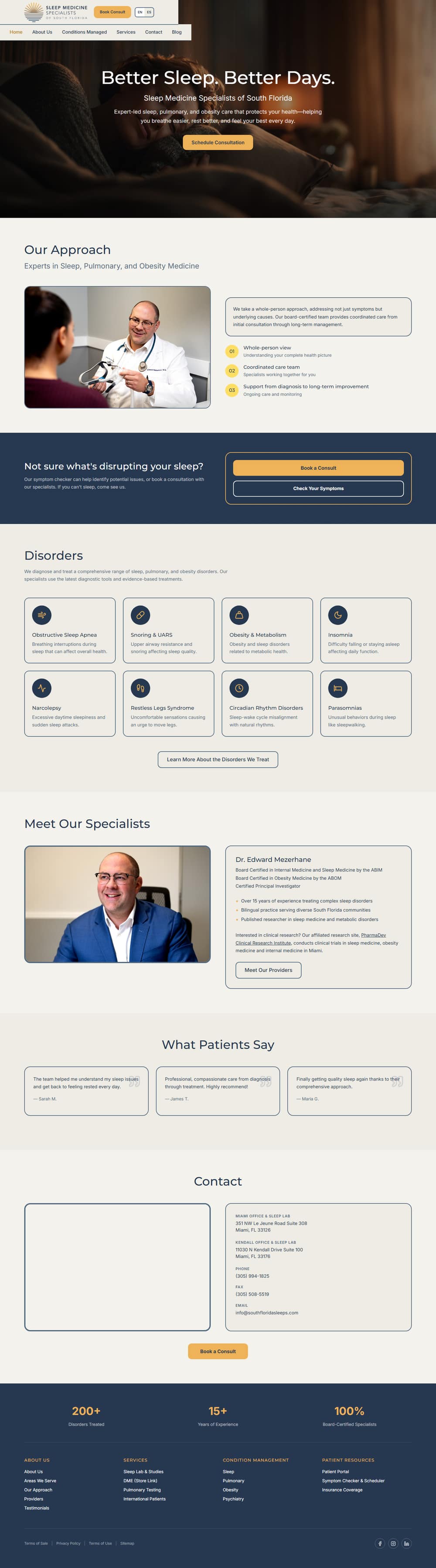
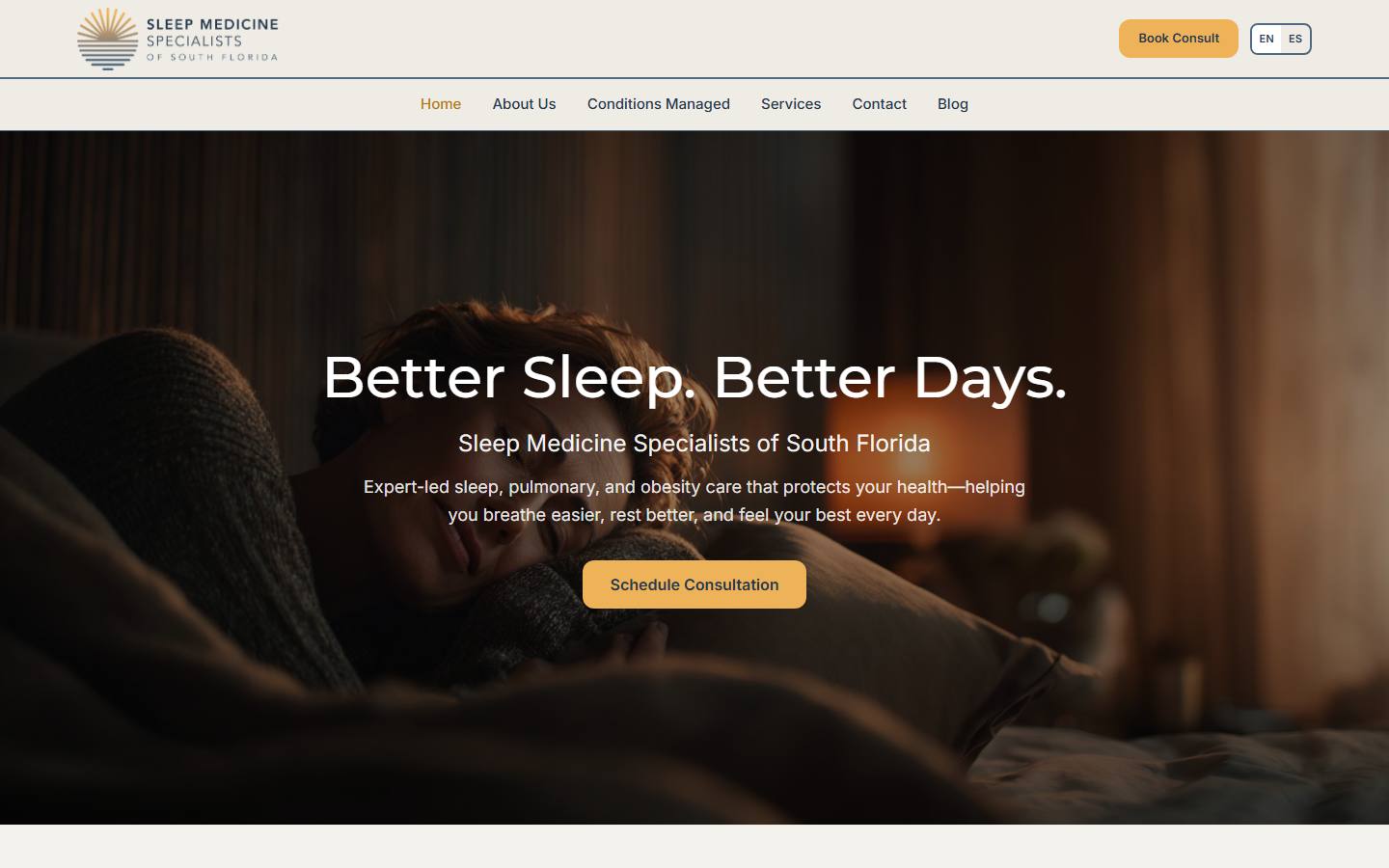
See Sleep Medicine Specialists of South Florida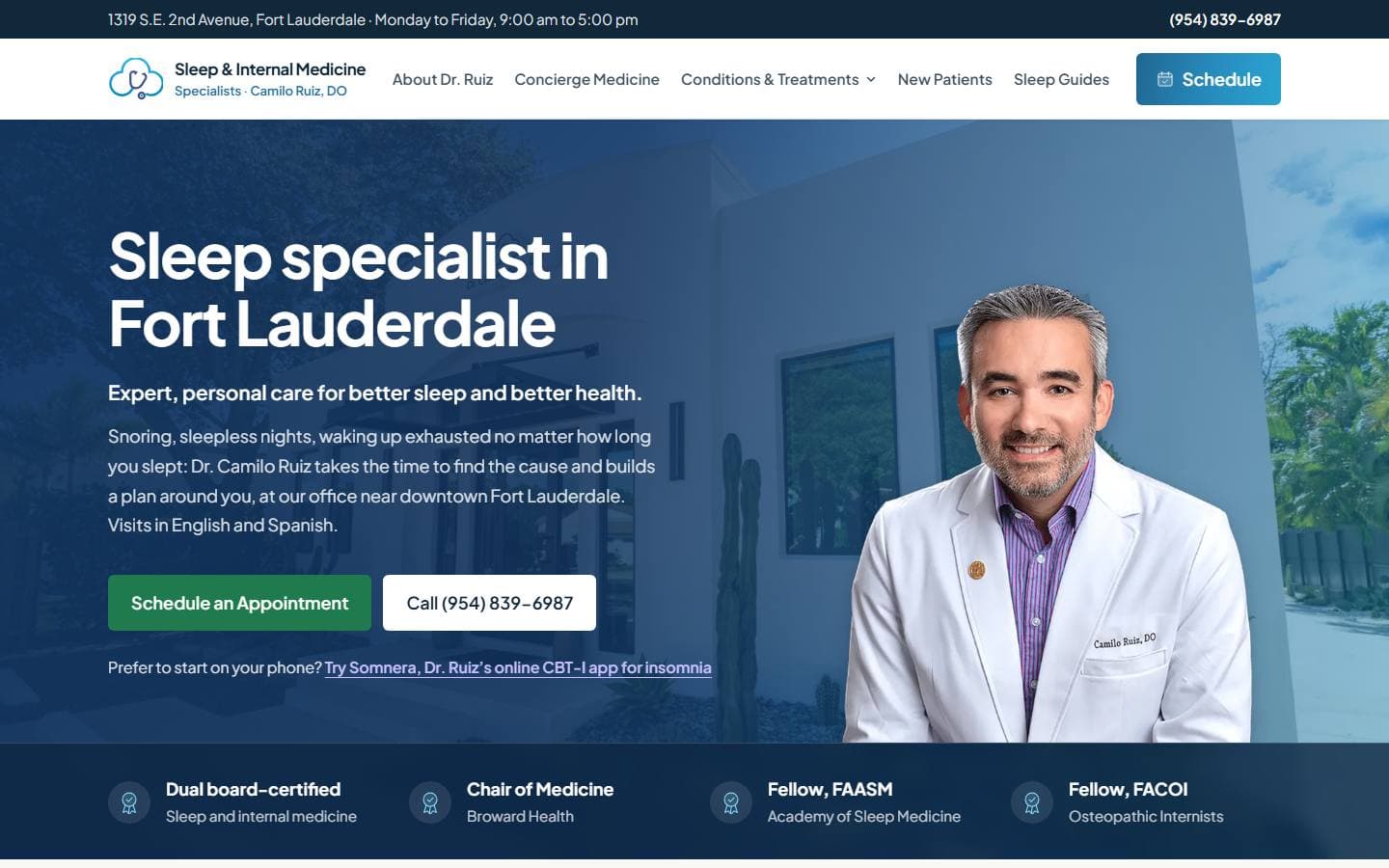
A pre-screener that respects the protocol
Three to six questions drawn from the key inclusion and exclusion criteria, so coordinators only call people with a real chance of qualifying. It collects only what screening needs.
See Sleep & Internal Medicine Specialists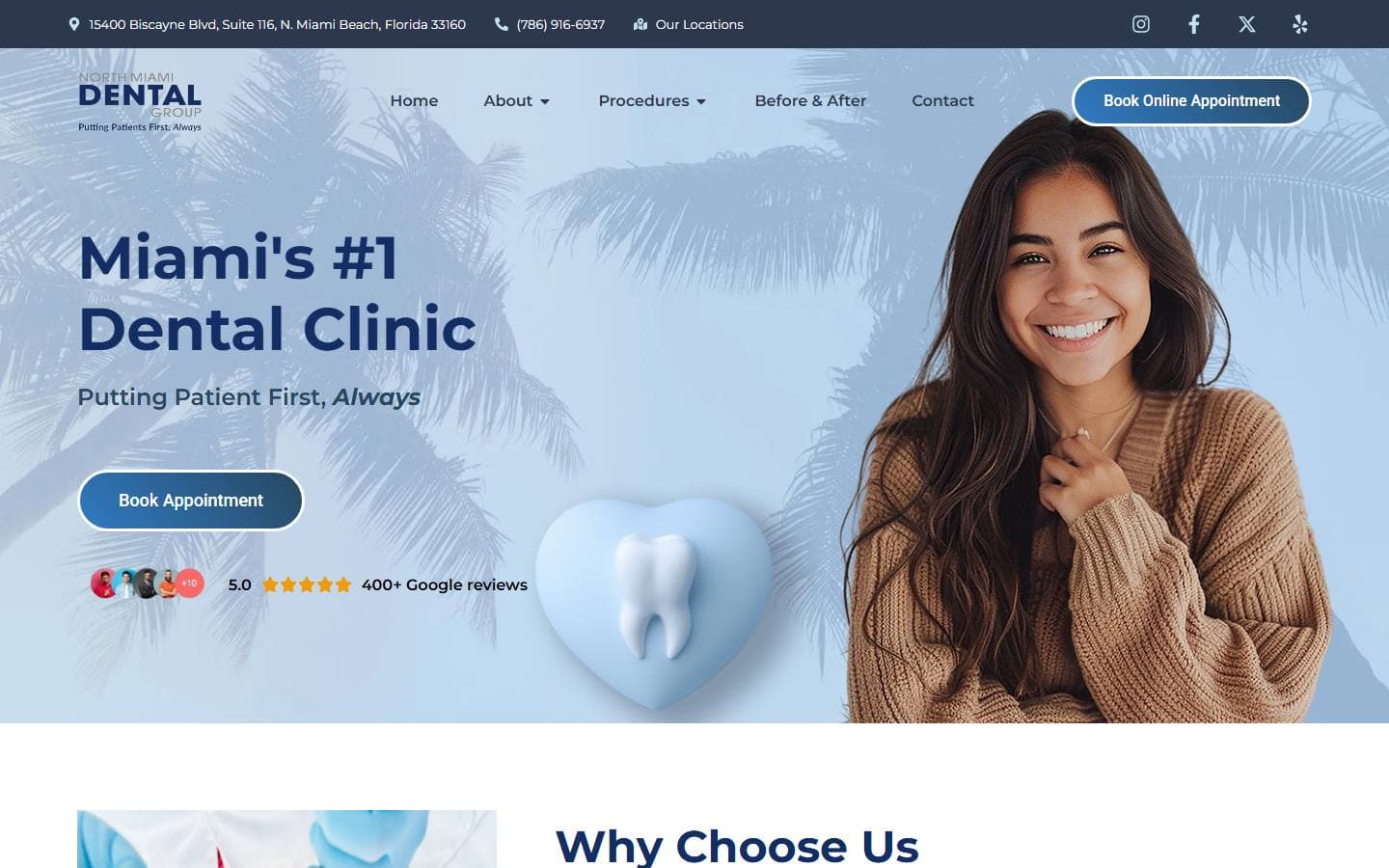
Follow-up in minutes, not days
Every qualified lead gets a text and a call the same day, with reminders before the screening visit, so interest doesn't fade while it sits in a spreadsheet.
See North Miami Dental GroupBefore you hire
What research sites need from a recruitment partner.
Three things that decide whether a campaign enrolls anyone.
Every ad and page goes through your IRB first
The FDA treats advertising for study participants as the start of informed consent, so its guidance expects the IRB to review recruitment materials before they're used. That covers ads, study pages, pre-screener wording and even the scripts staff use on follow-up calls.
A partner who drafts copy first and asks about approval later costs you weeks. We write every piece with the review in mind: no promises of a cure or of benefit, no wording that plays down risk, compensation stated plainly rather than as the headline, and the study described in words a participant would use.
We send your team a single approval packet with every ad, page and question in one place, and nothing goes live until it comes back approved. When a protocol amendment changes the criteria, the screener and pages change with it and go back through review.
Pre-screening is where cost per randomized patient is won or lost
Most recruitment waste happens after the click. A campaign that brings in hundreds of sign-ups looks busy, but if most of them fail on age, diagnosis or a medication they're already taking, your coordinators spend days on calls that go nowhere and the real candidates wait.
A short pre-screener, built from the handful of criteria that rule out the most people, fixes that. It filters before a person ever reaches your team, it tells people who don't qualify kindly and right away, and it hands coordinators a list worth calling.
Speed matters just as much. Someone who signs up for a study is often ready that day and much less interested three days later, so qualified leads should get a call or text within minutes during working hours and first thing the next morning otherwise.
Then the numbers that matter are screen visits and randomizations, not form fills.
Keeping health information where it belongs
A person who answers a pre-screener is telling you about their health, and that information has no place in an ad platform or an analytics dashboard. Our setup keeps the two apart.
Ad and analytics tools see that someone visited a page or finished the form, never their answers. Screener responses go to your team through secure forms and hosting, and we sign a business associate agreement wherever patient information is involved.
Tracking still reports what you need: which channel, which ad and which study produced each screen visit and each randomized patient. Your regulatory lead gets a written description of how data moves, what is collected and where it is stored, so they can check it against your site's policies and the sponsor's requirements before launch, rather than after a question comes up during monitoring.
Side by side
What a site-level recruitment partner does differently.
Compared with a general digital agency.
Ad and page copy
- General digital agency
- Written first, sent for approval later
- Built for research sites
- Drafted for IRB review, delivered as one packet
Lead quality
- General digital agency
- Every form fill counts
- Built for research sites
- A pre-screener built from the protocol's key criteria
Follow-up
- General digital agency
- Leads exported weekly
- Built for research sites
- Text and call the same day, with visit reminders
Health data
- General digital agency
- Form answers sent to ad platforms
- Built for research sites
- Kept out of ad and analytics tools, BAA where needed
Listings
- General digital agency
- Not touched
- Built for research sites
- ClinicalTrials.gov and directory profiles checked
Reporting
- General digital agency
- Clicks and cost per lead
- Built for research sites
- Cost per screen visit and per randomized patient
How it works
- STEP 1
Free audit
Your site, your Google profile and who outranks you.
- STEP 2
Plan and build
The pages, profiles and tracking your research site needs.
- STEP 3
Grow every month
New content, reviews and improvements, visible on your site.
- STEP 4
Report what matters
Calls, forms and booked participants, not just clicks.
Medical practices we work with
Trusted with patient-facing marketing.
Real sites we built and run. Tap any one for the full story.
Questions
What research sites ask us first.
Do you work with research sites or sponsors?
Research sites and site networks, mainly. We run recruitment for the studies a site has open, alongside the sponsor's own central campaigns, and report in the terms both care about: screen visits and randomized patients.
Have you done clinical trial recruitment before?
Yes. We currently work with a clinical research group in Florida, and we'll share specifics once they've agreed to it. Our wider medical work includes sleep medicine and dental practices across South Florida, where the same rules on patient privacy and careful wording apply.
Will our IRB need to approve the ads?
In almost every case, yes. FDA guidance treats recruitment advertising as part of informed consent, so we prepare every ad, page, screener question and call script for review and send it as one packet. Nothing runs until your IRB approves it.
Is the pre-screener HIPAA-compliant?
We set it up on secure forms and hosting, collect only what screening needs, keep answers out of ad and analytics tools and sign a business associate agreement where patient information is involved. Your regulatory lead gets a written description of the data flow before launch.
Do you work outside Florida?
Yes. We're based in Fort Lauderdale and work with research sites anywhere in the US. Ads, listings and reporting are run remotely, and each campaign is built for the area your site recruits from.
How much does clinical trial recruitment cost?
It depends on the number of studies, how hard the criteria are and the area you recruit from. After a free audit of your study pages, listings and current lead flow, you get a monthly plan with ad spend paid directly to Google and Meta, so you always see exactly what the media cost.
More for medical practices
Built for South Florida medical practices.
Based in Fort Lauderdale, working with practices nationwide.
Related industries
Free website report
See where your enrollment is leaking.
Drop your website and we'll email you a free report: who outranks you, what they do that you don't, and what to fix first.
Rather talk it through? Book a strategy call →